Go Bounce Play

Mobile Outdoor Adventure

BOOK NOW

  • Email
  • Facebook
  • Twitter
  • Home
  • My Events
    • Corporate Events
    • Promotional Events
    • Scout and Guide Camps
    • Shows and Fun Days
    • Schools, Colleges and Groups
    • Weddings, Parties and Private Hire
  • Activities
    • Spider Mountain
    • Bungee Trampolines
    • Combination deals
    • Bouncy Castles
    • Candy Floss and Sweet Kiosk
    • Retro Arcade Machines
  • FAQ’s
  • Blog
  • Contact

How to Book Mobile Attractions Without Stress

The best event entertainment gets people talking before the day starts and keeps them talking after it ends. That is why knowing how to book mobile attractions properly matters. Get it right, and you have a straightforward route to bigger crowds, better engagement and a smoother event. Get it wrong, and you can end up with an attraction that looks good on paper but does not fit your space, audience or timetable.

Mobile attractions are popular because they bring the experience to you. That changes the planning process. You are not just picking entertainment. You are choosing something that has to work with your venue, your guests, your timings and your event goals. Whether you are arranging a school reward day, a branded activation, a wedding, a scout camp or a company fun day, the booking decision should be practical first and exciting second.

How to book mobile attractions for the right event

The first step is being clear about what success looks like. Not every event needs the biggest or most extreme attraction on offer. A college enrichment day might need high-energy activities that keep students engaged in short bursts. A corporate event may need attractions that create queues, photo moments and easy interaction. A wedding usually needs something fun without overpowering the rest of the day.

This is where many organisers waste time. They start with a product instead of a purpose. If you begin by asking what the event needs to achieve, your shortlist becomes much clearer. Do you want to entertain children for several hours, create a focal point for a public event, increase dwell time at a promotion, or give mixed age groups something everyone can enjoy? The answer shapes everything that follows.

Portable adventure attractions, retro arcade machines and sweet kiosks all do different jobs. One creates spectacle from a distance. Another keeps people engaged in a smaller footprint. Another adds a simple extra that boosts the overall atmosphere. There is no single best option. It depends on the crowd, the venue and what kind of energy you want on the day.

Start with the venue before you fall in love with an attraction

A mobile setup only works if the site can support it. That sounds obvious, but it is often where bookings slow down. Before you commit, check the usable space rather than the total space. A field may be large, but if half of it is sloped, muddy or needed for parking, it is not all available. A school playground may look ideal, but gates, overhead obstacles or surface restrictions can affect what can be installed safely.

You should also think about access from the supplier’s point of view. Can equipment be brought in easily? Is there enough room for set-up vehicles? Are there time restrictions on arrival and pack-down? If your event is in a town centre, festival ground or shared venue, access windows can matter just as much as square footage.

Power is another practical point. Some attractions need more support than others. If your venue has limited power supply, that does not always mean your choices disappear, but it does mean the supplier needs to know early. The same goes for indoor versus outdoor use, weather cover and ground conditions.

A good booking conversation becomes much easier when you can give basic venue information straight away. Dimensions, surface type, access details, postcode and event timings will save a lot of back and forth.

Match the attraction to the audience, not just the budget

Budget matters, but value matters more. A cheaper attraction that does not suit the age range or event style is rarely a bargain. If you are planning for a mixed audience, look for options with broad appeal. Retro arcade machines, for example, can work across generations. A high-impact feature such as Spider Mountain or bungee trampolines can create visual pull and a real sense of occasion.

For schools and youth groups, throughput is a big consideration. You want something exciting, but you also need enough children to take part over the available time. For private parties, the experience may be more about variety and atmosphere than handling very large numbers. For commercial events, visibility and footfall are often part of the return on investment.

If you are unsure, tell the supplier what kind of guests are attending and roughly how many you expect. That is far more useful than simply asking what is most popular. The best choice is not the one that gets booked most often. It is the one that fits your audience on your date at your venue.

What information to have ready when booking

If you want a fast, accurate quote, gather the essentials before making an enquiry. The event date is the obvious one, but not the only one. You should also know the venue, estimated guest numbers, age range, event type and preferred timings.

It also helps to mention any restrictions early. This might include limited access, a strict setup window, sound limits, indoor-only space, safeguarding requirements, or a need for several attractions to work together as one package. If you are organising on behalf of a school, company or local authority, you may also need supplier documents before confirming. Asking for these at the start keeps the process moving.

The more complete your brief, the better the recommendation. A short message saying you need entertainment for a summer fair is a start. A message saying you need entertainment for 300 primary pupils, outdoors, between 11am and 3pm, with easy access from a car park, will get you much closer to a useful answer.

How to book mobile attractions as a package

Booking one attraction can work well, but packages often make more sense for larger events. They give guests more choice and help spread activity across the site. They can also be more efficient from a planning point of view because you are dealing with one supplier instead of several.

This is especially useful for family fun days, open days, corporate events and public shows. A high-visibility attraction can draw attention, while arcade machines or sweet kiosks keep people engaged in between headline moments. The right combination creates a fuller experience without making your planning more complicated.

That said, more is not always better. If your venue is tight or your event is short, too many attractions can split the crowd and reduce the impact of each one. It is often smarter to book fewer, stronger options that fit the space properly and keep a steady flow of participation.

Ask the practical questions that affect the day

Booking entertainment is not only about what guests will see. It is also about what your team will need to manage. Ask who provides staffing, how long setup takes, what happens in poor weather, and whether supervision requirements differ between attractions.

You should also ask how the attraction will run during the event. Some are continuous. Some work best in timed sessions. Some need queue management or a clear waiting area. None of this is a problem when planned properly, but it can catch organisers out if it is left until late.

Insurance and risk documentation are worth checking early as well, especially for schools, councils and corporate venues. Reliable providers are used to these questions. In fact, they usually welcome them, because clear planning makes the day run better for everyone.

Timing matters more than many organisers expect

The best mobile attractions are often booked well ahead for peak dates. School summer events, bank holiday weekends, end-of-term celebrations and Christmas functions can fill up quickly. If your date is fixed, enquire early.

That does not mean last-minute bookings are impossible. Sometimes there is flexibility, especially if your event date is outside the busiest periods. But if you have your heart set on a particular attraction or package, leaving it late reduces your options.

Early booking also gives you more room to think properly about layout, guest flow and any add-ons that could improve the event. That is particularly helpful for brand activations and larger public events where the entertainment needs to support wider event goals.

Choose a supplier that makes the job easier

When you are comparing options, price is only one part of the decision. Responsiveness, clarity and event experience matter just as much. You want a supplier that asks sensible questions, explains what is needed and helps you choose based on your event rather than simply pushing the biggest hire.

That is especially important if you are coordinating several moving parts at once. Schools, offices and family organisers rarely have time for vague replies and slow follow-up. A dependable provider should make the booking process feel straightforward, with clear communication from enquiry through to event day.

For many organisers, that is the real benefit of working with a specialist in mobile entertainment such as Go Bounce Play. You are not trying to piece together an experience from multiple places. You are building an event around attractions that are designed to travel, set up efficiently and create impact where your guests already are.

A good booking does not start with the flashiest option. It starts with the right questions, a realistic view of your venue and a clear idea of what your guests will enjoy. Once those pieces are in place, the fun part is easy.

How to Increase Engagement at Activations

A busy activation can still fall flat if people walk past, glance over, and keep moving. If you are working out how to increase engagement at activations, the answer is rarely just “get a bigger stand”. The real difference usually comes from choosing the right experience, placing it well, and giving people a clear reason to stop, join in, and stay a little longer.

For event organisers, marketing teams, schools and brands running live events, engagement is what turns footfall into value. It is the moment a guest joins the queue, takes part, shares the experience with friends, posts a photo, or starts a conversation with your team. That only happens when the activation feels easy to approach and worth their time.

What engagement actually looks like at activations

A lot of teams measure success too narrowly. They count attendance, maybe gather a few photos, and assume the activation worked. In practice, engagement is more useful when you look at behaviour.

Are people stopping without being chased down? Are they smiling, watching others take part, and waiting for a turn? Are families staying in the area rather than drifting off? Are staff having proper conversations instead of trying to drag people over? These are stronger signs that the experience is doing its job.

The best activations create a small crowd, but not a confused one. There should be visible energy around the space, a clear activity to join, and a simple next step for anyone who is interested.

How to increase engagement at activations from the start

The strongest activations are built around one simple question: why would someone stop here instead of anywhere else? If that answer is vague, engagement will be weak no matter how much branding you add.

Big visual attractions work because they create instant curiosity. People can see the fun before they hear the pitch. A climbing feature, bungee trampolines, retro arcade machines or a sweet kiosk all do slightly different jobs, but they share one advantage – they are obvious. Guests do not need a long explanation before deciding whether they want to get involved.

That said, spectacle on its own is not enough. A very large attraction can pull attention from a distance, but if queues are too long or the activity suits only a narrow age range, overall engagement may drop. Smaller interactive elements can sometimes perform better because more people can join in quickly. It depends on the event type, the audience mix and how much time guests are willing to spend in one place.

For a public promotion, visibility and throughput usually matter most. For a staff event or school setting, shared participation and repeat turns may be more valuable. The point is not to pick the biggest option by default. It is to pick the attraction that fits the behaviour you want.

Match the attraction to the audience

This is where many activations lose momentum. An attraction can be impressive and still be wrong for the crowd.

If your audience includes families, you need something broad in appeal. Parents need to feel the activity is easy to understand, safe to approach and genuinely enjoyable for children. If you are running a corporate event, a retro arcade zone or challenge-based interactive setup may get stronger engagement because adults can join in without feeling self-conscious.

School and youth events often benefit from attractions with clear turn-taking and visible excitement. When one group is taking part and another group is watching, anticipation builds naturally. That gives you energy around the activation even before the next guests step on.

The more mixed the audience, the more useful bundled entertainment becomes. Combining a headline attraction with a simple side element such as sweets, games or photo-friendly extras keeps more people involved while others wait. That is often far more effective than relying on one activity alone.

Layout matters more than most people think

Even the right attraction can underperform in the wrong place. If guests cannot see where to stand, how to join, or where the queue begins, many will avoid the activation altogether.

Good event layout removes friction. The activity should be visible from a distance, the access point should be obvious, and the viewing area should not block the people taking part. When passers-by can watch the fun without feeling in the way, you create a natural audience. That audience becomes your best advertisement on the day.

There is also a trade-off between central placement and usable space. A prime location in the middle of an event sounds ideal, but if it leaves no room for queuing or crowd build-up, it can hurt the experience. A slightly more open position often performs better because the activation has space to breathe.

Give people a low-effort way in

One of the fastest ways to increase engagement at activations is to reduce the mental effort needed to join. Guests should not have to ask three questions before taking part.

Clear signage helps, but so does the attraction itself. The best live experiences are self-explanatory within seconds. People see it, understand it, and imagine themselves having a go. If there are age limits, timing rules or booking slots, those need to be easy to spot and easy to explain.

Staff play a major role here. Friendly, switched-on crew make activations feel welcoming rather than awkward. They should be ready to guide people in with a simple invitation, explain what happens next, and keep energy up without sounding pushy. There is a big difference between active hosting and hard selling. Guests respond better when the atmosphere feels fun first and commercial second.

Build moments people want to share

If you want stronger engagement, think beyond participation and look at shareability. People are much more likely to stop for an activation that looks good in photos and feels like something worth showing others.

This does not mean every event needs a giant branded photo wall. Often, the attraction itself is the shareable moment. Height, movement, bright colours, classic games and visible reactions all help. A good activation creates snapshots naturally because the experience already looks exciting from the outside.

What matters is timing. If guests are having their best moment in the middle of the activity, make sure that moment is visible to onlookers. If the attraction produces a natural finish point, that is where staff can encourage photos, team celebrations or a quick branded interaction. Shared moments work best when they feel part of the experience rather than bolted on at the end.

Use pace to keep the energy high

Dead time kills engagement. Long pauses between participants, slow resets or unclear transitions can drain a busy activation surprisingly quickly.

Pace should be planned in advance. Think about how many people can take part per hour, how the queue will move, and whether waiting guests still have something to watch. This is one reason attraction choice matters so much. A very impressive setup with low throughput may suit a premium event with a smaller guest list, but at a busy public event it can create frustration.

The best activations balance spectacle with flow. They keep people moving without making the experience feel rushed. That balance usually comes from practical event planning rather than flashy design.

Make your team part of the attraction

A good crew does more than supervise. They create the atmosphere around the activity.

At live events, people often decide whether to join based on how comfortable others look. Staff who smile, chat naturally, celebrate participants and keep instructions clear make the whole space feel safer and more enjoyable. That matters just as much for family fun days as it does for branded activations.

It also helps to give staff one clear engagement goal. For some events, that may be queue conversion. For others, it may be encouraging repeat visits, collecting leads, or directing people towards another part of the event. If the team understands the job of the activation, they can support better outcomes instead of simply managing the equipment.

Think about what happens after the first interaction

The first stop is important, but it should not be the end of the experience. Strong activations create a next step.

That next step might be a conversation with your team, a branded giveaway, a second activity nearby, or a reason to return later in the day. At community events and public promotions, this is where thoughtful entertainment planning pays off. A single attraction grabs attention. A well-built activity zone keeps people engaged for longer and gives them more reasons to stay in your event space.

This is also where a mobile entertainment supplier can make life easier. If one provider can deliver a mix of high-impact attractions and supporting extras, the activation tends to feel more joined up. Go Bounce Play is built around that sort of event-ready setup, where the entertainment does not just fill space but helps create a busier, more interactive atmosphere.

Measure what people actually do

If you want to improve future activations, review the behaviour, not just the headline numbers. Look at queue length, dwell time, repeat participation, photo-taking, conversations started and the times when energy dipped.

That kind of feedback quickly shows whether the issue was attraction choice, location, staffing or flow. It also helps you avoid a common mistake: assuming low engagement means the crowd was wrong. Sometimes the crowd was fine and the setup simply asked too much of them.

The best activations feel easy, lively and worth joining straight away. When people can see the fun, understand the activity and step in without hesitation, engagement follows naturally. Start there, and the rest of the event gets easier to build around.

What Size Space for Bungee Trampolines?

If you are asking what size space for bungee trampolines, you are usually already planning the practical side of your event – where it will go, how guests will queue, and whether the venue can handle it properly. That is exactly the right question to ask early, because this attraction needs more than just a spare patch of ground. It needs enough room to operate safely, enough height for the jumping experience to feel exciting, and enough access for delivery and setup to run without delays.

Bungee trampolines are a brilliant visual attraction at school events, fun days, corporate activations, weddings and community shows because they create instant energy. They also draw a crowd. That means space planning is not just about the footprint of the equipment itself. It is also about the people around it, the ground conditions underneath it, and the route in and out for the setup team.

What size space for bungee trampolines is usually needed?

For most mobile bungee trampoline setups, you should expect to allow a clear operating area of around 9m x 9m as a practical minimum, although some units may need more depending on the frame design and site conditions. Height matters just as much as floor space. In many cases, a clear overhead height of at least 8m to 9m is needed for safe operation.

That gives you the basic answer, but real event planning is rarely that simple. The exact space requirement depends on whether the attraction is going indoors or outdoors, how close nearby structures are, what the ground is like, and whether the venue has enough surrounding room for queueing and supervision.

If you only measure the equipment footprint and ignore the safety margin, the area can feel cramped very quickly. A bungee trampoline is not an attraction you want squeezed between fencing, trees, buildings or catering units.

Why the footprint is only part of the answer

When people picture a bungee trampoline, they often think about the trampoline beds and support frame. What they do not always factor in is the full operating zone. Staff need space to fit harnesses, guide participants on and off, and monitor the attraction from all sides. Guests need room to wait without spilling into walkways. Spectators naturally gather too, especially at busy public events.

This is why a site that looks big enough on paper can still be awkward in practice. A narrow field corner, a courtyard with overhanging branches, or a venue with low roof sections can all create problems even if the square metre total seems fine.

For event organisers, the best approach is to think in layers. First, allow the core setup area. Then allow the safety clearance around it. Then allow enough surrounding space for access, queueing and crowd flow. That wider view usually leads to a smoother event day.

Outdoor space considerations

Outdoor venues are often the easiest option because height restrictions are less likely to be an issue. Even so, open air does not automatically mean suitable. The ground needs to be level and firm enough for the attraction to be installed correctly. Sloping ground, soft grass after heavy rain, loose gravel or uneven surfaces can all affect whether the unit can be set up safely.

You also need to look up as well as around. Trees, low branches, overhead wires, lighting rigs and nearby structures can all reduce the usable space. A large open field may be ideal, but a landscaped venue with decorative features can limit placement more than expected.

Wind exposure can also affect outdoor planning. On some sites, a wide open area is great for visibility but less ideal if it leaves the attraction too exposed. This is one reason why experienced suppliers will always want proper site details rather than a quick guess.

Indoor space considerations

Indoor bungee trampoline hire tends to be more restrictive because ceiling height becomes critical straight away. Sports halls, exhibition spaces and large event venues can sometimes work well, but smaller halls often do not have the clearance needed.

It is not only about the highest point in the room. Ceiling lights, beams, basketball hoops, heating systems and suspended signage can all reduce the true usable height. A venue manager may say the hall is tall, but the actual safe operating clearance can be much lower once these details are taken into account.

Door access matters indoors too. A venue might technically have the right operating area but still be unsuitable if the equipment cannot be brought in efficiently. Tight corridors, low doorways and sharp internal turns can become setup issues before the event has even started.

Access space matters more than many organisers expect

One of the most common planning mistakes is focusing only on where the attraction will sit, without checking how it will get there. Bungee trampolines are mobile attractions, but mobile does not mean they can be wheeled through any gap or across any surface without preparation.

The setup team will usually need sensible vehicle access or at least a clear route from the unloading point to the installation area. If the site is behind locked gates, across steps, through narrow passages or a long distance from parking, that can affect setup time and viability.

For public events, this becomes even more important if multiple attractions are arriving on the same day. Good access planning keeps the build efficient and helps the whole event site come together on time.

How much extra room should you allow around the attraction?

Beyond the main operating footprint, it is smart to allow additional surrounding space so the attraction does not feel boxed in. This extra room helps with queue management, staff movement and spectator viewing. It also improves the overall presentation. A bungee trampoline works best when it has enough breathing space to stand out as a feature attraction.

As a practical rule, event organisers should avoid placing it directly against other busy activity zones. If it is too close to food kiosks, staging, inflatables, fairground rides or pedestrian pinch points, crowd flow can become messy. Giving the attraction a little more room than the minimum often makes the site safer and easier to manage.

For schools and family events, that extra space is especially useful because children tend to cluster around visible, high-energy activities. You want excitement, but you also want clear boundaries.

Venue type changes the answer

A school field, hotel grounds, showground and town event space can all host a bungee trampoline, but the usable area may differ even when the measurements look similar. A flat grass field with easy gate access is very different from a paved courtyard with decorative planters and restricted entry.

Corporate events often prioritise presentation and guest flow, so organisers may choose to give the attraction a larger footprint within the site plan to keep the experience premium and uncluttered. Community fun days may focus more on throughput, making queue layout and perimeter management just as important as the ride area itself.

Private events such as weddings or large parties can be more space-sensitive. The attraction may need to fit around marquees, catering, seating and parking. In those cases, measuring the space early can save a lot of back-and-forth later.

The best way to check if your space works

The quickest route is to measure both the available ground area and the overhead clearance, then consider access and surroundings rather than the footprint alone. If possible, note the surface type, any slope, nearby obstacles and the width of entry points.

Photos help as well, particularly wide shots that show the full area and any potential restrictions. A simple sketch of the event layout can be useful too. For larger events, a site plan is even better. The more clearly the space is shown, the easier it is to confirm whether the attraction can be placed where you want it.

This is particularly helpful when you are trying to fit several attractions into one event. A provider such as Go Bounce Play can advise more accurately when the practical details are clear from the start.

Common space issues that cause last-minute problems

The biggest issue is underestimating height. Ground space often gets measured, but overhead clearance is forgotten until late in the process. The next most common problem is assuming a venue’s open area is fully usable when trees, fencing, uneven ground or access routes reduce it.

Another one is planning too tightly around other event features. Even if the attraction technically fits, a cramped layout can affect queueing, sightlines and supervision. That can turn a strong crowd-pleaser into a stressful part of the site.

A final issue is leaving measurement until the week of the event. By then, changing the layout can be awkward, especially if other suppliers, marquees or staging have already been confirmed.

So, how much space should you really plan for?

If you want a straightforward starting point, plan for around 9m x 9m with at least 8m to 9m of clear height, then check whether your venue also has suitable access, level ground and room around the attraction for queueing and safe operation. In some venues, that will be comfortably enough. In others, the obstacles around the space will matter more than the raw measurements.

The smartest event plans do not aim for the absolute minimum. They allow enough room for the attraction to operate properly, look impressive and keep guests moving easily around the site. If you can give a bungee trampoline that kind of space, it usually rewards you with exactly what you booked it for – a big visual impact and a queue full of guests ready to have a go.

When you are choosing attractions for a live event, space is not just a technical detail. It is part of the experience, and getting it right early makes everything else easier.

Scout Camp Activity Hire That Gets Everyone Involved

When a camp programme starts to feel thin by day two, energy drops fast. That is exactly where scout camp activity hire earns its place – giving leaders a simple way to add big, visible, high-participation experiences without turning planning into a second full-time job.

Scout camps already have plenty built in: teamwork, outdoor skills, evening activities and the usual mix of organised sessions and free time. The challenge is keeping momentum high across the whole event, especially when your group includes different ages, confidence levels and attention spans. A well-chosen hired activity can break up the timetable, create a genuine highlight and give everyone something to talk about long after the tents are packed away.

Why scout camp activity hire works so well

The best camp entertainment does not fight against the programme. It supports it. That is why scout camp activity hire works best when it adds excitement, handles a larger number of participants and gives leaders a reliable feature they do not need to build from scratch.

For many groups, the main appeal is practicality. Instead of sourcing specialist kit, arranging transport to an off-site venue or asking volunteers to run something technical, you can bring the activity directly to camp. That saves time, reduces moving parts and keeps the experience in one place. For busy leaders, that matters.

There is also a clear engagement benefit. Camps often include mixed friendship groups, mixed age sections or a blend of confident and quieter children. A striking, well-run attraction gives the whole site a focal point. It draws people in, creates a sense of occasion and helps fill those awkward gaps between scheduled sessions.

That said, not every activity suits every camp. The right choice depends on your group size, site layout, timetable and what kind of atmosphere you want. A high-energy challenge attraction creates one kind of buzz. A retro games zone or sweet kiosk supports a more relaxed social period. Neither is automatically better. It depends on the shape of your event.

Choosing the right scout camp activity hire for your group

Start with the practical question: what job does the activity need to do? Some leaders want a headline attraction for a camp open day or family visiting session. Others need something that can rotate lots of young people through quickly. Some want an evening entertainment feature that feels different from the usual camp routine.

If you are planning for high throughput, activities with quick turnarounds tend to work best. They keep queues moving and let more young people take part in a shorter window. If your aim is spectacle, a visually striking attraction can transform the feel of the camp and make the event look bigger, livelier and better organised from the moment people arrive.

Age range matters too. A camp with younger sections may need something broad, accessible and easy to enjoy straight away. Older groups often respond well to challenge-based attractions that bring a bit of competition and give them something more memorable than another basic field game. If your camp includes several sections together, the safest route is often a mixed entertainment setup rather than one very narrow activity.

Activity ideas that suit scout camps

Portable adventure attractions are usually the strongest fit because they match the outdoor setting and create instant impact. Climbing-style features such as Spider Mountain can work especially well at camp because they feel adventurous without requiring the group to travel elsewhere. They also create a natural gathering point, which helps keep the site feeling active.

Bungee trampolines are another strong option for camps that want a high-energy crowd-pleaser. They are visually exciting, easy for spectators to enjoy and give individual participants a proper turn rather than a blink-and-you-miss-it experience. For larger camps or public-facing events linked to scouting, that combination of movement and spectacle is hard to beat.

Not every camp wants full-throttle action all day, though. Retro arcade machines can be a smart addition where you want a social zone, a wet-weather backup area or a quieter entertainment space running alongside more physical activities. They are especially useful for mixed groups because they appeal across ages and give people something to do between scheduled sessions.

Food-based extras can also play a useful supporting role. Candy floss and sweet kiosks are not the main activity, but they do help create an event feel. For celebration camps, award evenings or family fun sessions, those details can make the whole programme feel more special without adding complexity for leaders.

Planning scout camp activity hire without the stress

The easiest bookings usually come from clear information at the start. Before you enquire, it helps to know your rough numbers, age range, postcode, preferred date and the shape of your timetable. You do not need a perfect event plan, but the more accurate your basics are, the easier it is to match the right attractions to your camp.

Space is one of the biggest considerations. Camps often seem to have plenty of room until you account for tents, parking, fire points, dining areas and activity zones already in use. Measure properly. A suitable field is great, but access routes matter as much as the footprint itself. Suppliers need to know how equipment reaches the site and whether the ground is appropriate.

Timing is the next thing to get right. A hired attraction can be booked for a peak slot, such as an afternoon feature or evening event, or for a longer period as part of the main camp programme. Neither approach is wrong. Shorter hires can be cost-effective if you want one big moment. Longer sessions tend to suit larger camps where you need enough time for everyone to have a proper go.

Power and supervision should be discussed early rather than treated as afterthoughts. Some attractions will have specific setup needs, while others are more flexible. Good planning here helps avoid awkward changes on the day and keeps the event running smoothly.

What leaders should look for in a provider

For scout camp activity hire, reliability matters just as much as the attraction itself. The best-looking setup in the world is no use if it arrives late, does not fit the site or creates confusion on the day. Leaders are already juggling registrations, safeguarding, catering and programme changes. Entertainment should reduce pressure, not add to it.

A good provider will be clear about what is included, what space is required and how the day will run. They should understand that camps are live environments with weather, changing timetables and lots of moving parts. Practical communication counts for a lot.

It also helps to choose a company with a broad enough range to build around your event rather than forcing a one-size-fits-all answer. Sometimes one headline attraction is enough. Sometimes the better move is a package that combines a high-impact feature with something more relaxed around it. That kind of flexibility is often what turns a decent camp activity into a standout programme feature.

Making the most of your booking on the day

Once your entertainment is booked, think about how it fits into the camp rather than treating it as a bolt-on. Position matters. If the attraction is tucked away from the main flow of people, it may not get the same energy as something placed where the whole camp can see it.

It is also worth thinking about group rotation. Camps run more smoothly when leaders know who is going where and when. Even a brilliant attraction can create bottlenecks if everyone turns up at once. A simple schedule keeps things moving and helps more young people enjoy the activity properly.

If your event includes parents, visitors or mixed sections, use the attraction as a centrepiece moment. It can anchor a fun day, support a presentation evening or give your camp a strong social hub. That is often where a mobile entertainment supplier really proves its value – not just by bringing equipment, but by helping the camp feel like a bigger occasion.

For groups that want a practical, high-visibility way to lift the programme, Go Bounce Play offers the kind of mobile attractions that fit camp life well: easy to bring in, exciting to watch and simple for organisers to build around.

The best scout camp memories are rarely the ones squeezed into a timetable box. They are the moments when the whole site comes alive, everyone wants a turn and leaders can see straight away that the extra planning was worth it.

Brand Activation Entertainment Hire That Works

When a promotional event looks busy but nobody stops, the problem usually is not the footfall. It is the experience. Strong brand activation entertainment hire gives people a reason to approach, stay longer and actually remember who put the event on. That matters whether you are planning a shopping centre promotion, a product launch, a staff engagement day or a public-facing roadshow.

The best activations do more than fill space. They create movement, conversation and shareable moments. If your setup feels flat, guests walk past. If it feels lively, visible and easy to join, people gather naturally. That is where interactive entertainment earns its place.

What brand activation entertainment hire should actually do

A good activation is not just about putting something fun on site. It needs to work hard for the event. That usually means attracting attention from a distance, giving people a low-friction way to get involved and making the brand feel like part of the experience rather than an afterthought.

Entertainment hire can do this brilliantly when it is chosen with purpose. A high-impact feature such as Spider Mountain or bungee trampolines creates instant visual appeal. Retro arcade machines can support longer dwell time and repeat play. Sweet kiosks add a friendly, welcoming touch that softens the commercial edge of an event and helps guests settle into the space.

The point is not to add noise for the sake of it. The point is to create a live environment where your audience interacts willingly. For some brands, that means energy and spectacle. For others, it means nostalgia, family appeal or something that suits mixed age groups. It depends on who you need to reach and how long you need them to stay engaged.

Choosing brand activation entertainment hire for your audience

The right attraction for a family fun day is not always the right fit for a corporate promotion. The strongest results come from matching the entertainment to the crowd, the venue and the brand objective.

If you are targeting families, schools or community audiences, interactive attractions that are easy to understand tend to work best. People can see what is happening immediately and decide to join in without needing a big explanation. That makes a difference at busy outdoor events where attention is short and movement is constant.

If your event is more brand-led, such as a product launch or retail activation, visual impact often comes first. You want something that pulls people in from across the venue and creates a natural queue or gathering point. A crowd attracts more crowd. Once people stop, your team has the chance to start conversations, hand out samples or capture leads.

For staff events and office family days, the brief is often broader. You are not only trying to promote something. You are trying to create a good atmosphere that suits colleagues, partners and children in the same space. In that case, variety matters more than one headline feature. A mix of adventure activity, retro gaming and catering-style add-ons can give guests more reasons to stay and spread out around the event.

Why mobile attractions make activations easier

One of the biggest advantages of mobile entertainment is practical. You do not need to send your audience elsewhere to have the experience. The attraction comes to your venue, your event footprint and your timescale.

That flexibility is a major win for event organisers. It means a car park, school field, festival site, corporate grounds or temporary event space can become a working activation area without needing guests to travel off-site. From a planning point of view, that helps with attendance, flow and overall control of the day.

It also makes entertainment more commercially useful. If the attraction is right next to your branded area, stage, stand or hospitality zone, it supports the event instead of competing with it. Guests stay inside your environment for longer. Your team gets more chances to engage them. That is a far better outcome than booking something impressive that sits too far away from the heart of the event.

Entertainment that creates dwell time, not just a quick glance

At busy events, attention is easy to win and easy to lose. A striking attraction may get people to look over, but that is only the first step. The real value comes from dwell time.

When guests spend longer in one area, everything improves. Brand conversations feel less rushed. Sampling works better. Photos are more likely. The event feels fuller and more successful. This is why interactive entertainment often outperforms static displays. It gives people something to do, not just something to notice.

That said, not every activity creates the same kind of engagement. Some are high-energy and fast turnover, which is ideal when you want lots of visibility and broad participation. Others encourage repeat interaction or more relaxed social time. Neither is automatically better. It depends on whether your priority is reach, depth of engagement or a mix of both.

What event planners should consider before booking

The smartest bookings are not always the biggest ones. Space, audience profile and event timings matter just as much as visual impact.

Start with capacity. If you expect a large public audience, you need attractions that can cope with steady demand and still keep the event moving. If your audience is smaller or more contained, you can focus more on experience quality and variety. There is no value in hiring something oversized if it dominates the site and leaves no room for the rest of the activation.

Venue layout matters too. Outdoor events offer freedom, but they still need careful positioning. You want entertainment to be visible enough to pull people in, while leaving room for queues, staff access and safe movement around the site. If food, giveaways or promotional stands are part of the activation, those elements should work together rather than sit in separate pockets.

Then there is the question of brand fit. A lively attraction can still be the wrong choice if it clashes with the tone of the event. A family-friendly public promotion may benefit from bold adventure features and sweet treats. A premium launch may need a more selective mix, using entertainment to support the atmosphere instead of overpowering it.

Bundled hire often gives better results

For many activations, a single attraction is enough to create a focal point. But when the event has multiple audiences or a longer running time, bundled entertainment hire often delivers more value.

Combining attractions lets you build a fuller event space. One feature may draw people in, while another keeps them there. Add a refreshment element such as candy floss, and the setup starts to feel less like a standalone activity and more like a complete event experience.

This is especially useful for school events, company fun days and public engagement campaigns where people arrive in waves and stay for different lengths of time. A broader mix helps maintain energy throughout the day. It also makes the event more inclusive. Not every guest wants the same level of activity, so giving them a choice usually improves overall satisfaction.

Providers such as Go Bounce Play are well placed for this kind of booking because mobile attraction packages can be shaped around the event rather than forced into a fixed format. That makes planning quicker for organisers and more enjoyable for guests.

Measuring whether the hire was worth it

Not every event success looks the same. For some organisers, success means footfall and visibility. For others, it is social sharing, staff morale, lead capture or simply making the event feel busy and memorable.

The key is to decide that upfront. If your aim is to draw a crowd, choose entertainment with strong visual pull. If your aim is conversation time, focus on attractions that encourage people to stay. If your aim is a well-rounded guest experience, build in enough variety to suit different ages and energy levels.

It is also worth being realistic. Entertainment can transform the feel of an event, but it works best when the rest of the setup is ready to support it. Staffing, signage, branding and event flow still matter. The attraction gets people there. What happens next is what turns attention into results.

Brand activation entertainment hire works best when it feels easy for guests and useful for organisers. If it can stop people in their tracks, give them a reason to take part and help your event feel alive from the moment they arrive, you are not just filling a space – you are giving your brand a proper moment to land.

Staff Fun Day Entertainment That Gets Used

If your last team event peaked at a buffet queue and a half-hearted raffle, it was never really an event problem. It was an engagement problem. The best staff fun day entertainment gives people something to do, not just somewhere to stand, and that is what turns a polite work gathering into a day people genuinely talk about afterwards.

For HR teams, office managers and event organisers, that difference matters. You are not just filling a field or a car park. You are creating an atmosphere that works for mixed ages, mixed confidence levels and mixed ideas of what counts as fun. That is why entertainment choice needs to be practical, visible and easy to join.

What good staff fun day entertainment actually looks like

A strong staff fun day is built around participation. People need attractions they can spot from a distance, understand in seconds and try without feeling put on the spot. If an activity needs a long explanation or looks like it is only for the sporty few, a large part of your audience will simply walk past.

That is why interactive attractions tend to outperform passive entertainment. A retro arcade zone, bungee trampolines, candy floss stalls or a headline visual piece like Spider Mountain all give guests an immediate reason to stop, watch and get involved. Some people will jump straight in. Others will start as spectators, then join once they see colleagues enjoying it.

The best mix usually includes a bit of everything. You want a visual centrepiece, a few easy-access activities, and some lighter fun around the edges so the day never feels flat. When the entertainment is varied, the event works for the confident extroverts and the quieter members of staff at the same time.

How to choose staff fun day entertainment for your team

The first question is not what looks most impressive online. It is who is attending. A staff fun day for 60 office employees on a private site needs a different setup from a company-wide summer event with families, children and hundreds of guests.

Audience shape changes everything. If families are invited, you need attractions that work across age groups and keep the day moving. If it is adults only, you can lean more heavily into high-energy challenge activities, competitive elements and shared experiences that break the usual workplace routine.

Venue matters just as much. Outdoor entertainment needs enough space, sensible access and a layout that allows people to move naturally between activities. A large open field gives you freedom to create impact with bigger attractions. A smaller corporate site may need a tighter package that still feels busy and exciting without overcrowding the area.

Then there is timing. A three-hour afternoon event calls for quick-win attractions with high turnover. A full-day staff celebration can support more variety, including sit-down refreshment stations and entertainment that keeps drawing people back in waves. It depends on whether you are planning a short morale boost or a flagship annual event.

The attractions that usually get the best response

There is a reason physical, visual entertainment performs so well at staff fun days. It creates energy before anyone even takes part. People can hear it, see it and gather around it, which helps build momentum across the event.

Bungee trampolines are a strong example because they are active, safe to supervise and instantly eye-catching. They give adventurous guests something memorable while still creating a great spectator moment for everyone nearby. The same is true of larger challenge attractions that bring a proper event feel to the space rather than making it look like a standard workplace gathering.

Retro arcade machines offer something different. They are easy to understand, easy to approach and surprisingly effective across age groups. For staff events, that matters. Not everyone wants to bounce, climb or compete physically, but plenty of people will happily step up to a familiar game and have a go. They also work well in breakout areas where you want constant background activity.

Food-based entertainment earns its place too. Candy floss and sweet kiosks are not just add-ons. They create movement, colour and a little nostalgia, which helps soften the corporate feel of the day. They also give guests a natural pause point between attractions.

A combination package is often the smartest route because it avoids putting too much pressure on one headline activity. If one attraction is busy, guests can drift to another. That keeps queues manageable and helps the event feel fuller for longer.

Why variety beats one big attraction

One standout feature can draw attention, but it rarely carries an entire staff event on its own. People engage in different ways. Some want a thrill. Some want a laugh. Some want something they can enjoy while chatting with colleagues. If your event only caters to one type of guest, you will feel the drop-off quickly.

Variety also improves flow. When entertainment is spread across a few formats, guests circulate rather than clustering in one area and losing interest. That movement changes the mood of the whole event. It feels active, well planned and worth staying at.

This is especially useful when you are trying to bring different departments together. Shared entertainment gives people a reason to mix outside their usual teams. It is much easier to start a conversation when there is a game, challenge or attraction in front of you than when everyone is standing around making small talk.

Common mistakes when booking staff fun day entertainment

The most common mistake is booking for appearance rather than behaviour. A supplier photo might look brilliant, but if the activity suits only a small slice of your guest list, the reality on the day can feel underused.

Another issue is underestimating scale. If you have a large attendance and too few activities, queues build, guests disengage and the event starts to feel repetitive. On the other hand, overbooking for a small site can make the space feel cramped and awkward. The sweet spot is a package sized for your attendance, venue and event length.

There is also the question of practicality. Reliable setup, clear power requirements, safe operation and simple booking arrangements all matter. Event organisers usually do not want to juggle multiple suppliers, delivery schedules and setup windows if one provider can handle the entertainment package properly. That convenience is not a small extra. It reduces stress and leaves more room to focus on the wider event.

Making the day feel inclusive, not forced

Staff events can be tricky because not everyone arrives in the same mood. Some people are there to throw themselves into every activity. Others are cautious, reserved or simply tired after a busy week. Good entertainment gives both groups a way in.

That means balancing high-energy attractions with easy-entry options. A visual centrepiece pulls attention. Arcade games and sweet kiosks offer low-pressure participation. Open layouts help too, because guests can watch first and join later without feeling they are stepping into a spotlight.

Inclusivity is also about tone. The day should feel welcoming rather than competitive by default. Friendly challenge works well. Forced participation usually does not. If people can choose how they take part, they are far more likely to get involved on their own terms.

Booking staff fun day entertainment without overcomplicating it

The easiest events to run are usually the ones with a clear entertainment brief. Know your likely numbers, confirm whether families are attending, measure the available space and decide what kind of atmosphere you want the day to have. Once those basics are in place, choosing attractions becomes far simpler.

For many businesses, the strongest option is a ready-made package that combines one or two high-impact attractions with supporting entertainment and refreshments. That gives you the spectacle people expect from a fun day, while keeping the planning manageable. It also helps your budget go further because you are building a joined-up experience rather than adding random pieces one by one.

If you want the day to feel busy, memorable and worth leaving the desk for, entertainment has to do more than fill space. It needs to create movement, conversations and moments people would not get in the office. That is where a mobile event setup really comes into its own, because the experience arrives ready to work at your venue instead of asking your team to travel elsewhere.

Go Bounce Play works with exactly this kind of brief – practical, high-impact entertainment that is easy to book and built to get people involved. And when the attractions are right, your staff fun day stops feeling like another company date in the calendar and starts feeling like a proper event people are glad they attended.

When you are planning your next team event, aim for entertainment people can see, understand and enjoy straight away. That is usually the difference between a nice idea and a genuinely busy field.

12 Outdoor Party Entertainment Ideas

The fastest way to lose a crowd at an outdoor event is to assume good weather and a few deckchairs will do the job. Guests need something to watch, join in with, queue for and talk about afterwards. The best outdoor party entertainment ideas create movement, energy and those little moments people remember long after the tables are packed away.

If you are planning a school fun day, a company event, a wedding reception or a private party, the right entertainment does more than fill time. It helps shape the atmosphere, gives guests a reason to stay longer and makes the event feel properly put together. The trick is choosing attractions that fit your audience, your space and the pace of the day.

What makes outdoor party entertainment ideas work?

A good booking is not always the biggest or the loudest. It is the one that suits the people attending and gives them a clear reason to join in. For a family-heavy event, that usually means visible, easy-to-understand activities with broad age appeal. For a corporate crowd, it may mean interactive attractions that break the ice quickly without feeling childish.

Outdoor entertainment also needs to earn its footprint. If an attraction takes up a fair amount of space, it should either create strong visual impact, high guest turnover or both. That is why active attractions, classic fair-style treats and recognisable games tend to perform well. They pull people in without needing much explanation.

There is also the question of flow. One large attraction can be a headline feature, but if everyone queues in one place and nowhere else, the event can feel flat around the edges. In many cases, a better option is a mix of high-impact centrepieces and smaller supporting entertainment that keeps the whole site lively.

1. Bungee trampolines for high-impact excitement

If you want an attraction that gets heads turning from across the venue, bungee trampolines are hard to beat. They bring height, movement and a strong sense of spectacle, which makes them ideal for larger outdoor events, promotional days and company family fun days.

They are particularly effective when you want entertainment that teenagers and older children will still find exciting. That matters because many event planners focus heavily on very young children and then realise there is not much for everyone else. A more adventurous attraction helps widen the age appeal.

3. Climbing activities that feel like an event within the event. Introducing “The Spider Mountain”

Portable climbing attractions such as Spider Mountain give guests something a bit different from the usual party setup. They feel active, adventurous and memorable without requiring people to travel to an activity centre. For schools, scouts, guides and public events, that convenience can make a huge difference.

This kind of attraction works best when you want your event to feel bigger than a standard party. It turns a field, car park or venue grounds into something more like a live experience. That can be especially useful for organisations trying to create a standout annual event rather than a one-off gathering that feels interchangeable with last year.

4. Retro arcade machines for all-age appeal

Not every guest wants to bounce, climb or queue for a physical challenge. Retro arcade machines add a different rhythm to the day and often become one of the most talked-about areas at mixed-age events. Adults get the nostalgia factor, younger guests enjoy the novelty, and they suit everything from weddings to office parties.

They also work well as part of a wider package because they give people something to do between headline activities. If you are planning an event with varied age groups or guests arriving in waves, arcade-style entertainment helps keep the atmosphere busy without demanding constant supervision from attendees.

5. Candy floss and sweet kiosks that create atmosphere

Food-based entertainment is not just about feeding people. It adds colour, scent and that familiar fairground feeling that can lift an outdoor event very quickly. Candy floss and sweet kiosks are particularly effective because they are visual, family-friendly and easy to understand at a glance.

They are best used as part of a fuller entertainment plan rather than the only attraction. Think of them as atmosphere builders. They help create queues in a good way, encourage guests to move around the space and give children one more reason to stay engaged.

6. Wedding entertainment that keeps all ages involved

Outdoor weddings often have a tricky middle section. The ceremony is over, photographs are happening, and not every guest wants to sit still for long stretches. This is where smart entertainment choices really help. A mix of soft fun for children and interactive attractions for older guests can stop the day dipping.

Bouncy castles, sweet kiosks and retro games all work well here, but the right balance depends on the tone of the wedding. Some couples want a full-on fun day feel, while others want entertainment that blends into a more polished setup. Neither is wrong. It just needs to feel intentional.

7. School and youth group entertainment with strong throughput

Schools, colleges, scout groups and guide groups usually need entertainment that can handle numbers. Throughput matters as much as excitement. Attractions should be engaging, easy to rotate groups through and suitable for the age bracket on site.

This is where a combination approach usually wins. One larger attraction gives the event a centrepiece, while supporting activities reduce bottlenecks and keep pupils occupied across the venue. It is practical, but it also makes the event feel better organised from the first arrival to the last collection.

8. Corporate events that do more than fill a field

Corporate event planners often need outdoor entertainment that feels fun without becoming awkward. The safest choice is not always the best one. People remember attractions that give them something to do, not just something to look at.

For staff fun days, summer parties and brand activations, interactive entertainment works because it starts conversations naturally. It gives colleagues, clients or attendees a shared experience without forcing formal team-building. That is often the sweet spot – relaxed, visible and easy to join.

9. Community and public events that attract footfall

If you are organising a show, fundraiser or local fun day, entertainment has two jobs. It needs to keep people on site once they arrive, and it needs to make the event look busy enough to pull others in. Big visual attractions are valuable here because they create instant presence.

Public events also benefit from variety. Some guests want high-energy activities, some want treats, and some just want something to watch while they wander. A site with different types of entertainment feels fuller and more welcoming than one built around a single feature.

10. The case for bundled entertainment packages

One of the easiest ways to improve an outdoor event is to stop booking entertainment one item at a time. Bundled packages tend to work better because the attractions are selected to complement each other. You get a stronger mix of visual impact, guest participation and overall value.

This approach also reduces admin. For busy schools, HR teams and private hosts, dealing with one supplier instead of several can make the planning process far easier. Go Bounce Play fits neatly into that model by bringing multiple attraction types directly to the venue, which helps organisers build a fuller event without turning booking into a project of its own.

How to choose the right outdoor party entertainment ideas

Start with the audience, not the attraction. A wedding with lots of children, a branded public activation and a Year 6 leavers’ event may all be outdoors, but they need very different pacing. Once you know who the event is for, think about space, power access, likely guest numbers and how long you need people entertained.

Then think in layers. A standout attraction draws attention, but supporting entertainment keeps momentum going. If your event lasts several hours, variety matters more than you might expect. Guests do not all arrive at once, and they do not all want the same experience.

Finally, be realistic about weather and layout. Outdoor events always come with variables. The best setups are not just fun on paper. They are practical to run, easy for guests to access and strong enough to keep the atmosphere going even if the British weather does what it does best.

The right entertainment makes an outdoor event feel alive from the moment guests arrive. Choose attractions that suit the crowd, create visible excitement and take pressure off your planning, and the whole day becomes easier to enjoy.

Checking your suppliers have all correct documentation

When booking any rides or activities for whatever event you have planned, it’s important to check all documentation. ADIPS (Amusement Device Inspection) certificates should be available on booking, this is an annual inspection check to make sure that everything has been checked by an independent tester. Public Liability Insurance Certificates should also be checked either £5m or £10m PLI is required for most events. Risk assessments should be updated annually and any changes made appropriately. CRB checks are something that’s rarely given by companies and although not essential are something well worth having for piece of mind.

Go Bounce Play supply all this documentation on booking with them to ensure piece of mind. Whether booking with Go Bounce Play or another supplier it is well worth while checking that this documentation is available.

If you would like to get in touch with Go Bounce Play for bungee trampoline, bumpercarz, spider mountain, climbing wall and a number of other activities for your event. You can contact directly George Holland (Operations Manager) at thehollandfour@me.com. You can see some of the activities available at gobounceplay.co.uk


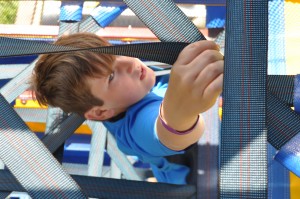
Boy climbing through spider mountain


[awesome-weather location=”North Devon” size=”tall” units=”C”]

Spider Mountain Scotland

Spider Mountain Scotland

Spider Mountain positioned in shopping centre

Want something very different for your event in Scotland, try our Amazing Spider Mountain. A 8 Metre high tower that children and Adults must climb to a vertical drop slide.

Whether its a Show, Scout Camp, Guide Event, Party or Highland Games, we can provide the spider mountain to any region of Scotland or the UK. To enquire about booking click here

It is operated by ourselves, with a vast experience of the leisure sector. We have been used by a number of companies and have experience with children with learning disabilities. We can provide an experience that will never be forgot. We pride ourselves on safety with £5m public liability insurance, full ADIPS safety certification, full risk assessments and disclosure Scotland CRB checks.

Boy climbing through spider mountain

Boy climbing through the webbing at a scout event

This is not only a challenging activity but provides a great backdrop for any event. Go Bounce Play have invested in a new set of spider web platforms with 3 strategically placed solid sections throughout the tower. This enables the less confident children (and adults) to get through with confidence.


Not only does this improve confidence but provides additional quick output. We can put through an amazing 120 participants an hour through the tower. The drop slide exit creates an exciting finale to the attraction.

Scouting event in Scotland

The footprint for this activity installed is 17m L x 5m W x 7.5m H. It has to be installed on a flat area. Please remember that we need vehicle access to bring the Spider Mountain to you, so ensure we can get in your event.

Looking to make a booking?

BOOK NOW

NEW for 2017

2017 – The year of the ZoomerCarz!

The new year is around the corner. We are very excited about our new adventure for 2017. Check out the ZoomerCarz! Fun from ages 5-95. These cars can be positioned anywhere and create a real buzz. All started and stopped by our trained operators, this makes it easy to be safe. Not as aggressive bumping as they have a inflatable ring attached to give a smoother bump.

They are controlled during activation by the children and are easy to use and operate.

Click on the link below to watch the ZoomerCarz in action.

Zoomercarz

Only a handful in the UK and we are the lucky providers already for a number of events. To contact us for more information on this and much more contact us today.

Oops! We could not locate your form.

« Previous Page
Next Page »

Signup To Our Newsletter

    Your Name (required)

    Your Email (required)

    we support change for life
    Tweets by @gobounceplay

    DOCUMENTATION

    Copyright © 2026 · Web Design Manchester · Mobile Outdoor Adventure Sitemap